THE INDICATORS
ClearPath is a three‑indicator framework designed to be used together, in order:
Environment Gauge → Trend Clarity → Momentum Pulse
Each indicator answers one question. None are intended to be used in isolation.
The ClearPath Sequence
THE ORDER MATTERS
Environment Gauge defines market regime (permission).
Trend Clarity confirms structural alignment (direction).
Momentum Pulse highlights permissioned impulses and exhaustion risk (timing and risk awareness).
If the framework is quiet, that is often the correct output.
Indicator 1 — Environment Gauge
Each indicator answers one distinct question, and they MUST be interpreted in order.
What environment are we in?
The Environment Gauge defines the dominant market regime:
Constructive — participation is conditionally favored
Neutral — uncertainty dominates (stand down by design)
Defensive — capital preservation is prioritized
The Environment is anchored to the Weekly timeframe and projected consistently to lower timeframes. Lower timeframes provide detail — not truth.
How to read it:
Color = regime.
Intensity = internal pressure.
Learn More
The Environment Gauge defines the dominant market regime and establishes the risk context in which all decisions occur. It is anchored to the Weekly timeframe, then projected consistently onto lower timeframes to prevent regime whipsaw and context drift. The Environment does not respond to intraday price swings — by design. Its role is to provide stable permission, not responsiveness.
What it is
A regime framework: Constructive, Neutral, or Defensive
A risk‑context filter — not a timing tool
Stable and persistent by design
What it is not
A signal or entry indicator
A trend predictor
Something that flips intraday
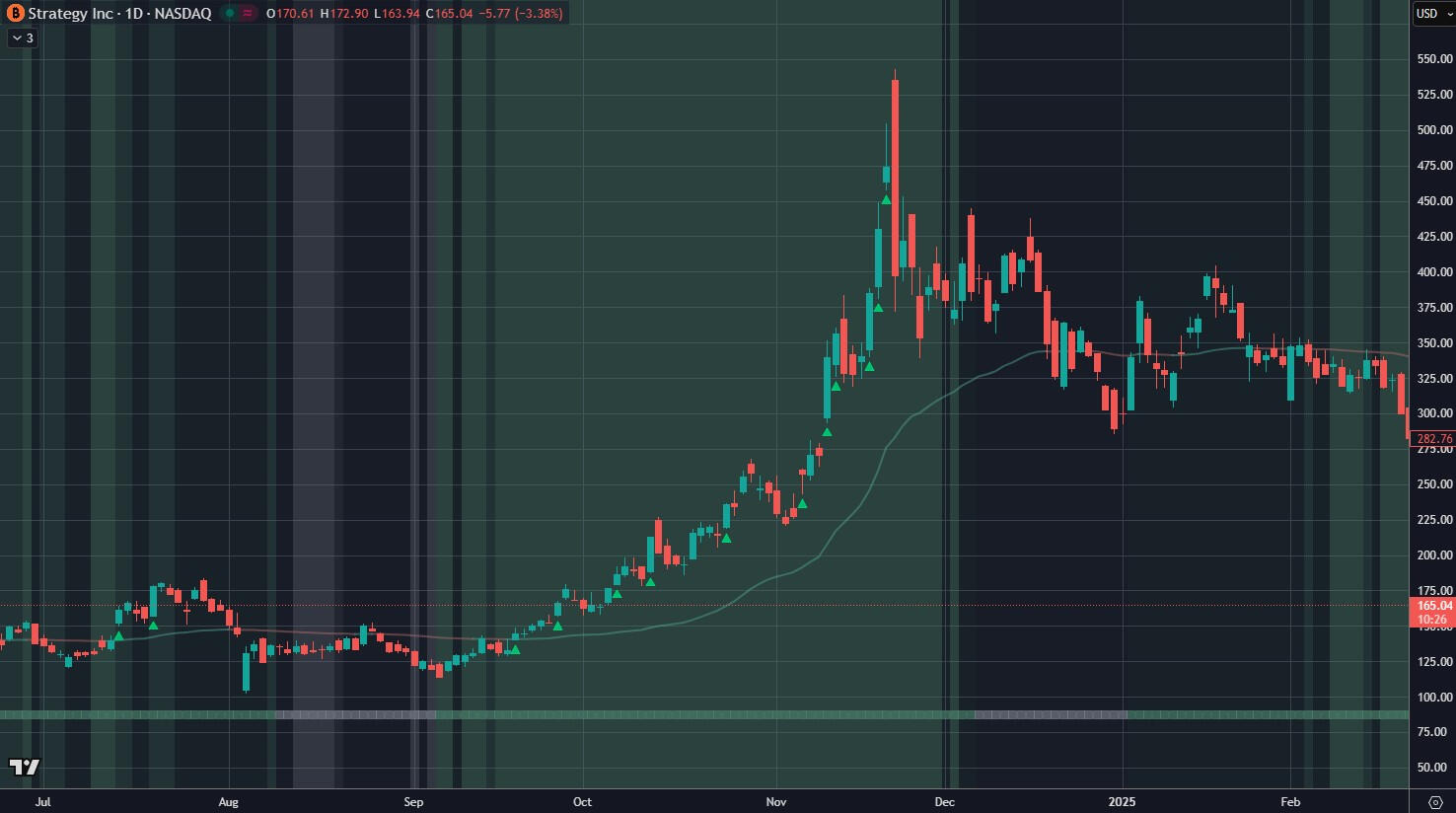
A Weekly or Daily example showing regime stability across long stretches, with lower‑timeframe detail present but regime unchanged.
Indicator 2 — Trend Clarity
Is structure aligned?
Trend Clarity provides a single adaptive baseline that reflects structural alignment, not short‑term movement.
Up‑colored baseline → structure supports higher prices
Down‑colored baseline → structure supports lower prices
Neutral baseline → transition / consolidation
Trend Clarity is not a signal. It does not predict breakouts or reversals. It is designed to reduce noise and emotional overrides by keeping structure clear.
Learn More
Trend Clarity provides structural alignment, not urgency. It uses a single adaptive baseline to determine whether price structure supports directional bias within the current environment. Trend Clarity is intentionally conservative — it resists reacting to short‑term accelerations, isolated candles, and emotional price moves. This keeps structure clear when momentum becomes noisy.
What it is
A structural baseline
Directional context, not timing
Adaptive to market conditions without over‑reacting
What it is not
A buy or sell signal
A momentum oscillator
A fast‑reacting average or crossover
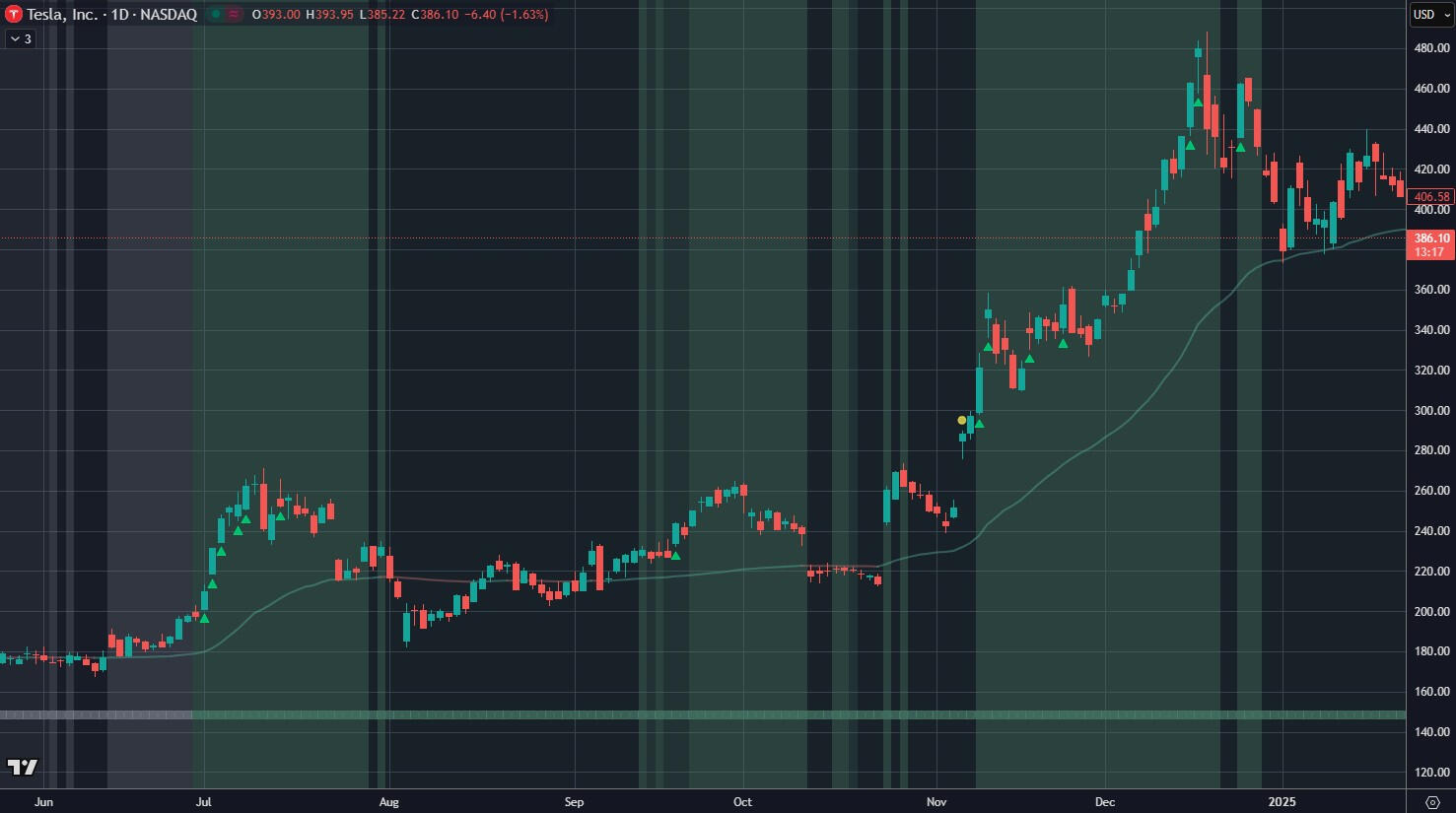
A trending market where price pulls back repeatedly without breaking structural alignment.
Indicator 3 — Momentum Pulse
Is this a favorable moment to act?
Momentum Pulse highlights thrust events only when conditions justify participation.
Green ▲ — permissible bullish impulse
Red ▼ — permissible bearish impulse
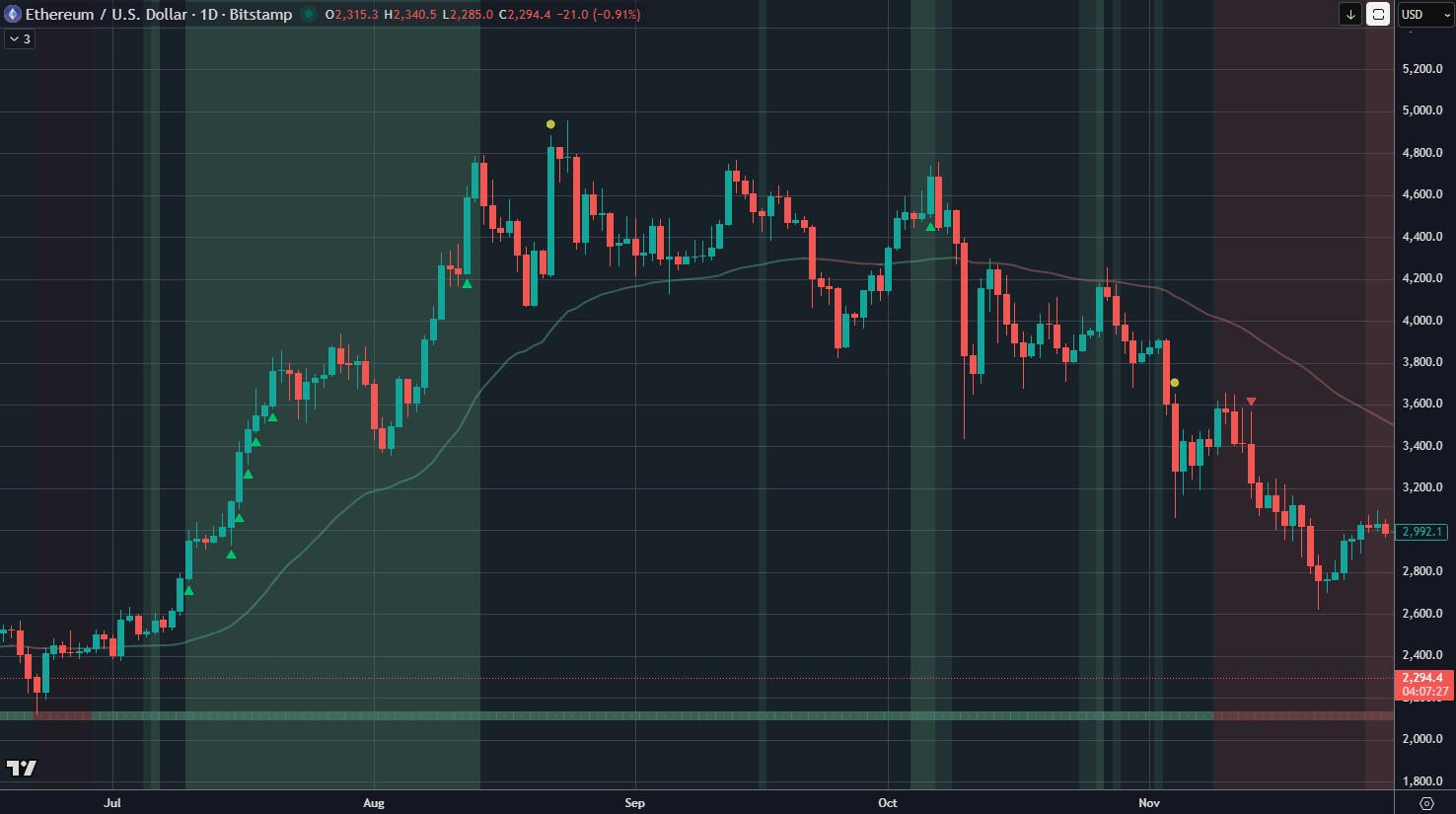
Yellow ● — exhaustion risk (caution, not a reversal call)
Momentum is intentionally event‑based, not continuous. Long stretches without pulses are expected and healthy.
Exhaustion warnings are a risk‑management cue:
a thrust occurred, but conditions blocked participation and price was already extended relative to structure.
Learn More
Momentum Pulse identifies thrust events, not continuous momentum. Pulses only appear when the Environment permits participation and structure aligns. Because of this gating, momentum signals are event‑based and infrequent. Yellow exhaustion warnings highlight moments where risk has increased due to extension — they are cautionary, not predictive.
What it is
Permissioned momentum events
Context‑aware and gated
A timing and risk‑awareness layer
What it is not
A signal stream
A reversal or top/bottom indicator
A substitute for structure or context
A strong move where pulses occur early, with an exhaustion warning appearing late in the move.
See the indicators in context
Practical Use
HOW TO USE THESE TOGETHER
Start with Environment Gauge
Neutral → stand down
Constructive → favor bullish participation
Defensive → favor defensive posture
Confirm with Trend Clarity
Align with structure, not emotion
Use Momentum Pulse for timing
Take impulses only when context permits
Treat yellow dots as “don’t chase / manage risk,” not as a signal
Links / Access
Documentation is public. Indicator access is invite‑only.
DOCUMENTATION
REQUEST ACCESS